The Future of Women’s Health May Depend on How AI Teaches Medicine to Learn
“We have built a science of the human body on half its evidence and called it complete.”
Susie Welty, MPH, Founder of SPARK by Kokoro, and Project Director for AI & Data-Driven Innovation at the University of California, San Francisco
For generations, women’s health has been shaped by incomplete datasets, underrepresentation in clinical research, and medical education systems that treat female biology as a variation rather than a foundation for discovery. As artificial intelligence reshapes healthcare, researchers are asking whether it can close longstanding evidence gaps not only by improving diagnostics but also by accelerating the way clinicians and institutions learn from women’s lived experiences across the lifespan.
Yet the crucial question is not whether AI can generate insights, but whether healthcare and academic institutions are prepared to absorb them.
To better understand what responsible innovation looks like, we spoke with Susie Welty, whose work at the University of California, San Francisco sits at the intersection of women’s health, scientific discovery, and applied innovation, with a focus on how better data can lead to better care and stronger research ecosystems.
Meet the Expert: Susie Welty, MPH
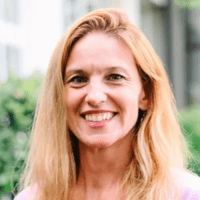
Susie Welty, MPH, is the founder of SPARK by Kokoro, a strengths-based parenting app for families of young neurodivergent children, and project director for AI & data-driven innovation at the University of California, San Francisco (UCSF).
With more than two decades of experience in public health, Welty works at the intersection of women’s health, data science, health systems innovation, and applied AI. Her current work focuses on how better data and emerging technologies can close long-standing gaps in women’s health research, improve clinical learning, and support more inclusive models of care.
Welty founded SPARK from her own experience raising two autistic children, bringing together product strategy, community design, and public health expertise to build tools that families can use and trust.
A Foundation of Ignored Structural Issues
“A foundational understanding of our hormonal cycle has been absent. The hormonal cycle governs immune response (autoimmune disorders), structural integrity (propensity to injury), mood, metabolism, the whole architecture of a woman’s health, and medicine has treated it, for the better part of its history, as noise.”
In short, medicine has built its textbooks without clear regard for the central structures of female biology. Ask any woman who has been told her symptoms are “all in her head,” and often there is the same story. The pain is real and often ignored, with support from medicine missing.
What Susie Welty points to is not a gap in individual physicians’ competence but a structural absence that runs through the entire history of medical science and shows up everywhere.
Coaches design training programs around male hormonal baselines, physical therapists evaluate strength without asking where a patient is in her cycle. For example, Welty shares as a result that “ACL injury rates in female athletes are significantly higher in the pre-ovulatory phase, when estrogen peaks and ligament laxity increases, a finding that has barely reached standard sports medicine practice.”
Meanwhile, in the pharmacy, the blind spot is just as stark. “Drug metabolism shifts across the cycle, meaning the same dose of the same medication can behave differently depending on hormonal phase, a fact almost never accounted for in prescribing,” she explains.
And neither chart tracks cycle phase, because the electronic health record was not built to ask, and medical school did not train clinicians to think of it as relevant. The consequences cascade in ways that look like separate problems until you map them against the data a woman’s body is already generating. This is because their “immune activity fluctuates cyclically, which helps explain both why women are more susceptible to autoimmune disease and why symptoms flare and remit in patterns that look psychiatric until they are mapped against hormonal data.”
In other cases, a woman with lupus sees her rheumatologist during a quiet week and is told her disease is well-controlled. She sees her therapist during a flare and is asked whether her anxiety is under control. No system prompts them to look at the calendar of her body alongside the calendar on their desks.
Welty lists the remaining omissions, detailing that “Cardiovascular risk markers, including blood pressure and inflammatory indicators, shift across the cycle. Depression and anxiety in women frequently track hormonal transitions, perimenopause, the luteal phase, postpartum, yet are routinely treated as primary psychiatric conditions rather than hormonally mediated ones. Seizure frequency in women with epilepsy follows the cycle. Sleep architecture changes with it. Even the microbiome responds to it.”
And still it is ignored.
“We have built a science of the human body on half its evidence and called it complete,” Welty says.
What the Data Are Starting to Show
If the problem began with exclusion, part of the solution may lie in the sheer volume of information that has accumulated despite it. Walk into any hospital today, and the data is there in decades of electronic health records, imaging archives, prescription histories, most of it collected from women who were never required to be in clinical research until 1993.
Welty acknowledges the historical failure outright, noting that “the fact that women were not required to be in clinical research until 1993 is a huge structural gap,” but she is not interested in dwelling on it. What interests her is what becomes possible now: “there are a lot of data sets available now through EHR and studies that can give us insights with new computational methods.”
AI does not need studies designed perfectly from the start. It needs scale, pattern, and the ability to see across silos.
“Specifically looking at the constellation of symptoms in perimenopause, precision medicine approaches for women like sex specific treatment for migraines or depression that are mediated by hormones.”
A woman in her mid-forties experiencing brain fog, heart palpitations, and mood swings might see a neurologist, a cardiologist, and a psychiatrist. Each collects their own data. But none sees the constellation that AI can.
The technology is exposing flaws in supposedly gender-neutral tools. “These data can also help us understand where diagnostics that were developed and tested on men do not work for women,” she explains. For example, the treadmill stress test, the troponin threshold for heart attack or the way sepsis presents in the ER. All the research is built for male bodies, and produces false reassurance when applied to women.
Then there is the deeper pattern. In particular, “AI is identifying that women present differently across conditions, cardiovascular disease, sepsis, depression, chronic pain and that diagnostic criteria built on male cohorts produce errors that have gone largely uncorrected.” A woman having a heart attack may not have crushing chest pain. Her nausea and jaw pain get labeled anxiety. A woman with sepsis may not spike the fever that triggers the protocol. The algorithm trained on male fever curves misses her until she is in shock.
Imaging is another frontier where the machine is learning to see what residency never taught, and “in imaging, models are finding sex-specific biomarkers in cardiac and bone density scans that clinicians weren’t trained to look for,” she states.
And in the domain that has historically drawn the least research funding relative to its burden, the results are perhaps most striking: “In reproductive health, AI is catching early signatures of preeclampsia and preterm birth more accurately than standard screening.” This is achieved not by replacing obstetricians, but by seeing combinations of markers like blood pressure trends, protein levels, fetal growth patterns, and maternal history that the standard checklist evaluates one by one.
Teaching Medicine to Learn in Real Time
So what good is a discovery if the clinician in room three does not know what to do with it?
This is where the conversation shifts from what AI can see to how humans can be taught to act on it. Change could start with something as simple as a prompt on a screen.
“For clinicians, we can develop clinical decision support tools that identify symptoms across systems (brain, metabolism, immune, cardiac, etc.) and flag women’s health conditions that were previously missed because they showed in a body system that the provider did not treat,” Welty explains. Suddenly the gastroenterologist evaluating unexplained bloating sees a question she never expected: have you considered perimenopause? The machine has seen enough patterns to know that the gut and the ovaries share a vocabulary that individual organs do not speak on their own.
With this, the efficiency gains could be dramatic. Welty points out that “for researchers, we can use LLMs to scrape clinical notes and existing data sets (data lakes) to leapfrog discoveries that have not been specifically funded.” A postdoc with a small grant no longer has to wait five years for a new cohort study. She can ask a language model to read ten years of electronic notes and generate hypotheses that can be tested prospectively.
“Medical students in general will learn how to talk to patients who are more informed and have done their own research, hopefully resulting in less women being dismissed.”
Medical education will have to evolve into something more collaborative, more nimble, and if done well, provide kinder outcomes to female patients.
Deciding to Break Silos or Build Bridges
“Medicine organizes itself in silos, cardiology doesn’t talk to endocrinology, research doesn’t reach the clinic, and a woman’s lifetime of health data sits scattered across systems that were never designed to connect. AI can change that architecture, but only if the people inside those institutions agree to let it,” Welty outlines.
The resistance is not always visible, instead showing up in ways like the Electronic Health Record vendor contract that blocks data sharing; in the tenure committee that rewards individual publications over collaborative infrastructure; or, in the department chair who sees cross-specialty AI tools as a threat to referral patterns rather than a benefit to patients. This points to incentive problems often dressed up as logistical and technical ones.
With this in mind, Welty’s prescription is both structural and cultural.
“Responsible implementation means deciding collectively that the goal is a complete picture, hormonal, cardiovascular, immune, psychological, across a woman’s entire life, not a series of disconnected specialty encounters,” she says. That means redesigning incentives so that a cardiologist is rewarded for asking about menstrual history, and an endocrinologist is rewarded for flagging cardiovascular risk. It also means rethinking competition entirely, because “it means federated models that let health systems share what they’re learning without surrendering autonomy. A rising tide, not a competition over who owns the insight.” Under a federated model, hospitals contribute to a shared model without handing over raw patient data.
Moving forward, these are the issues that researchers and institutions must address to make progress. While the technology exists, the research and medical culture may not be ready to absorb it if not leveraged thoughtfully. AI can already see patterns in women’s health that humans have missed for centuries. The question is whether medical schools, health systems, and research institutions will build the systems and research to turn those patterns into better care.
Ultimately, the future for progress is not yet clear. It will depend on whether leaders decide that a complete science of the human body is worth more than the silos that have fragmented it. Whether clinicians are trained to see hormonal cycles as significant, and whether patients who have done their own research are met with curiosity rather than dismissal.
The future of women’s health may depend on how AI teaches medicine to learn. But first, medicine has to agree that there is something it does not yet know and is worth learning.