Can AI Strengthen Public Institutions Without Undermining Trust? Inside Singapore’s Approach to AI at Scale
“AI deployment in public systems is 20 percent modeling and 80 percent organization, data, governance, and people.”
Laurence Liew, Director of AI Innovation at AI Singapore and GPAI Co-Chair
Across much of the world, artificial intelligence remains a policy ambition inside government. In Singapore, it is already shaping how public institutions train talent, deploy technology, and deliver services. As governments move beyond pilot programs and policy frameworks, the challenge is no longer simply whether artificial intelligence can improve public systems. The deeper question is whether public institutions themselves are equipped to absorb it responsibly.
In education, healthcare, infrastructure, and administrative services, AI is increasingly being positioned as a tool to reduce operational friction, improve decision-making, and expand access to public resources. Yet in practice, implementation often exposes something more complicated. Legacy systems, fragmented data environments, workforce skill gaps, and unclear ownership continue to slow adoption long after political enthusiasm or funding has arrived.
This tension is becoming more visible as governments face growing pressure to modernize while maintaining public trust. Unlike private companies, public institutions cannot optimize solely for speed or efficiency. Decisions involving citizens, public funds, and critical infrastructure carry a higher burden of accountability, requiring institutions to think carefully about governance, workforce readiness, procurement, and long-term stewardship. As countries across Asia-Pacific, Europe, and North America explore how artificial intelligence fits into the machinery of government, the gap between strategy and execution is becoming harder to ignore.
Few countries have approached that challenge as systematically as Singapore. Through national workforce initiatives, applied engineering programs, and standards aligned with international frameworks, the city-state has spent the past several years translating AI policy into operational practice.
To better understand what responsible deployment looks like inside real institutions, we spoke with Laurence Liew, who has helped shape some of Singapore’s most visible efforts to build AI capability across government, industry, and society.
Meet the Expert: Laurence Liew, Director of AI Innovation at AI Singapore and Global Partnership on Artificial Intelligence Co-Chair
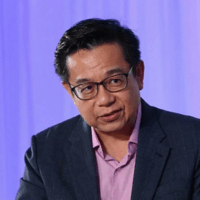
Laurence Liew is the director of AI innovation at AI Singapore, author of AI-First Nation, and co-chair of the Global Partnership on Artificial Intelligence (GPAI).
A trailblazing figure in Singapore’s AI and technology landscape, Liew brings over three decades of entrepreneurial and leadership experience to his mission of transforming Singapore into a leading AI-First nation. As a former Microsoft regional director, he has consistently been at the cutting edge of tech innovation. He developed Singapore’s first Linux company and led Revolution Analytics’ Asia Pacific expansion (later acquired by Microsoft). Liew is now spearheading AI Singapore’s groundbreaking initiatives in AI adoption and talent cultivation.
Under his leadership, the 100 Experiments (100E) program has delivered over 100 real-world AI projects across various industries, from startups to multinational corporations. He has collaborated with IBM, GIC, Sompo, and Q&M Dental, demonstrating the program’s impact in accelerating AI adoption in Singapore.
Through the LearnAI initiative, Liew has exposed over 200,000 Singaporeans to AI education, expanding access to AI skills through initiatives like AI for Everyone, AI for Industry, and AI for Students.
Where AI Is Delivering Real Public-Sector Impact
For all the attention surrounding generative AI, some of the most meaningful deployments inside government remain far less visible. In Singapore, the strongest results do not come from headline-grabbing experiments or symbolic pilot programs. They have emerged from operational environments where institutions are solving specific problems, supported by teams that understand both the technology and the workflows it is meant to improve.
“The fact is, the most tangible impact has come where AI is solving a clearly defined operational problem with a willing internal owner, not where it’s being deployed because someone decided ‘we should have AI,’” Laurence Liew explains.
Across public-sector deployments, Liew says the most successful applications tend to be practical rather than theatrical. Claims and case triage, document understanding, predictive maintenance for public infrastructure, anomaly detection in compliance systems, and assistive tools for frontline officers have all delivered measurable value by addressing operational bottlenecks that institutions already understand.
In education, he points to AI systems that support personalized learning and reduce administrative burden on teachers, allowing educators to focus more of their time on instruction rather than paperwork.
“The genuine wins are in personalized learning support and freeing teachers from administrative load, not replacing pedagogy,” he shares.
What separates these successes from stalled initiatives is rarely the model itself. Liew identifies three recurring factors: leadership commitment that remains active beyond project launch, accessible and usable data, and engineering teams capable of taking a prototype into production. Clear business ownership also matters. Projects without defined accountability, he notes, often struggle long before deployment.
Across more than 300 enterprise AI projects completed through Singapore’s 100 Experiments initiative, the pattern has remained remarkably consistent. “The AI is rarely what fails,” Liew says. “It’s the readiness around it.”
That lesson has shaped not only how Singapore deploys AI inside institutions, but also how it prepares the workforce expected to build, manage, and govern those systems.
Building AI Talent Beyond the Traditional Pipeline
In many national AI strategies, talent is treated as a future workforce challenge. In Singapore, it functions as part of the infrastructure needed to support long-term adoption. As public institutions, schools, and industry move to integrate artificial intelligence into real-world systems, the country’s leadership focuses not only on developing new technologies, but on building the people capable of designing, managing, and scaling them.
Through programs led by AI Singapore, that effort is structured as a national pipeline. AI for Everyone introduces foundational literacy to students, professionals, and civil servants. AI for Industry builds intermediate technical fluency. At the deepest end sits the AI Apprenticeship Program, or AIAP, where participants move beyond classroom learning into live enterprise environments with real stakeholders, real datasets, and delivery expectations.
“What AIAP has shown us is this: the conventional assumptions about who can do AI are simply wrong,” Laurence Liew says. Over more than fourteen cohorts and 500 apprentices, roughly 80 percent of participants come from outside traditional computer science pathways. “They come from economics, psychology, biology, mechanical engineering, mathematics teaching, law, accountancy. What matters is the ability to learn fast, comfort with data, and a genuine passion for solving problems. Everyone can learn to program. Not everyone has a passion for data.”
The numbers help explain why the model continues to draw attention beyond Singapore. According to Liew, around 70 percent of apprentices receive job offers before completing the program, while 99 percent secure roles within six months. Graduates move into organizations including DBS Bank, Google, Meta, and ST Engineering. “This is not an accident,” Liew says. “AIAP is built around solving actual industry problems via 100E, not synthetic exercises.”
The ambition extends beyond filling immediate government or enterprise hiring needs. “AISG produces more AI engineers than we can absorb, by design,” Liew says. “The outflow into industry is the point, not a leakage problem.”
Yet building technical talent at scale solves only part of the challenge. Once organizations begin integrating AI into existing systems, deeper institutional weaknesses often come into view.
Why Most AI Projects Fail Before They Scale
By the time many organizations begin an AI project, the hardest problems often have little to do with the model itself. Budgets may be approved, executive sponsors may be enthusiastic, and strategic priorities may already be in place. Yet once implementation begins, institutional weaknesses that were easy to overlook during the planning phase quickly become difficult to ignore.
“Honestly? The bottleneck is rarely the AI. It’s organizational readiness,” Liew says.
Across hundreds of projects, he sees the same pattern emerge. “Enthusiastic executive sponsor. Allocated budget. A confident claim that ‘we have the data.’ Then the project starts, and the executive disappears after kickoff, the data turns out to be scattered across fifteen spreadsheets and three legacy systems, and the IT team is too busy with other priorities to engage.”
For public institutions, these breakdowns carry consequences beyond delayed timelines. Systems tied to citizen services, education, healthcare, compliance, or infrastructure require continuity, governance, and technical ownership long after an initial proof of concept is completed. Without that foundation, even promising pilots can stall before they reach meaningful scale.
To reduce that risk, Singapore’s 100 Experiments initiative builds readiness checks into the process before a project is approved. “Our project vetting process, before any commitment of resources, requires the organization to build a baseline model with their own data,” Liew says. “If they cannot get to a baseline, they are not ready, and we would be wasting everyone’s time.”
Financial commitment is treated as another signal. “We also require a 1:1 financial co-investment, which turns curiosity into commitment,” he says. Engineering ownership matters just as much. Teams receiving an AI system are expected to be able to maintain the model, monitor for drift, retrain it with new data, and integrate updates into day-to-day workflows.
A newer challenge is emerging just as quickly. With tools like OpenAI’s ChatGPT now widely accessible, public institutions are confronting a different governance problem. “The third, and increasingly important, bottleneck is shadow AI,” Liew says. “The risk isn’t that public servants don’t use AI. It’s that they use it without governance.”
For Singapore, that reality reinforces a broader lesson: technical capability matters, but institutions that fail to align leadership, data, incentives, and governance often struggle long before the technology itself has a chance to prove its value.
Building Systems That Can Scale Beyond One Country
As governments develop their own approaches to artificial intelligence, regulatory philosophies are beginning to diverge. Some jurisdictions move toward comprehensive legislation. Others focus on sector-specific rules, voluntary frameworks, or public-private experimentation. For smaller states that rely on global trade, international investment, and cross-border technology partnerships, the challenge is not simply building domestic AI capability. It is ensuring that local systems remain credible, compatible, and trusted across multiple regulatory environments.
For Singapore, that has shaped much of its governance strategy. “Singapore’s approach has been to stay interoperable, not parochial,” Laurence Liew says. “We don’t have a blanket AI law of the EU AI Act variety, and that’s deliberate. We’ve favored agility, principles, and industry-led adoption over prescriptive regulation.”
That flexibility is paired with standards designed to connect Singapore’s institutions with broader international frameworks. One example is AI Verify, Singapore’s AI governance and testing framework, which Liew says has been mapped against both the National Institute of Standards and Technology AI Risk Management Framework and standards developed by the International Organization for Standardization. “An organization using AI Verify is simultaneously aligning to Singapore, US, and EU expectations,” he says.
Singapore also adopts ISO/IEC 42001 as a national standard, giving organizations a certifiable management system for governing AI. According to Liew, Changi Airport Group is among the first organizations globally to receive certification under the framework. For industries managing critical infrastructure, transportation, healthcare systems, or sensitive public data, these standards offer a practical pathway for governance without waiting for sweeping new legislation.
For Liew, the lesson from years of implementation is clear. “AI deployment in public systems is 20 percent modeling and 80 percent organization, data, governance, and people.”
As more governments move from policy ambition to institutional adoption, Singapore’s experience suggests that the future of public-sector AI may depend less on who builds the most advanced models, and more on who builds institutions capable of using them responsibly.