Can Saudi Arabia’s Vision 2030 Make AI and Digital Skills the Core of Its Education System?
Saudi Arabia’s success will be strongest when we build a full digital learning ecosystem that engages students, teachers, families, and communities, ensuring that innovation translates into meaningful human capability development.
Husa Alangari, PhD, CEO for KSA at Ultimate Learning Academy
Saudi Arabia’s Vision 2030 places human capability development at the center of national transformation, positioning education as a strategic pathway to future economic resilience. The transition toward a knowledge-driven economy requires a population equipped with advanced digital skills, and the country’s leadership views AI literacy as essential to long-term competitiveness.
This focus emerges at a time when global labor markets are reorganizing around automation, data, and emerging technologies, prompting governments worldwide to redesign schooling and workforce pipelines. Saudi Arabia’s approach reflects this shift but applies it through coordinated national planning rather than fragmented institutional change.
The Kingdom’s Human Capability Development Program identifies digital skills as foundational for economic diversification, innovation-driven industries, and the growth of sectors such as advanced manufacturing, health technology, cloud computing, and smart city development. National initiatives in digital infrastructure and cloud computing, including investments supporting large-scale projects such as NEOM, underscore the need for a workforce capable of engaging with AI-enabled systems across both the public and private sectors. As international competitors such as Singapore, the United Arab Emirates, and South Korea expand their digital talent strategies, Saudi Arabia faces rising pressure to accelerate educational modernization to secure a place in the global technology landscape.
These conditions shape the country’s rapid push to integrate AI and digital skills throughout K–12, higher education, and national workforce development programs. The core challenge is not simply introducing new technologies but reshaping learning systems so that digital competence becomes a baseline expectation for all learners. Whether Saudi Arabia can embed these capabilities at scale depends on how effectively institutions coordinate, adapt, and sustain the reforms set in motion by Vision 2030.
To examine how these reforms are taking shape in practice and what they signal for the future of AI-integrated learning, we spoke with Dr. Husa Alangari, the CEO for KSA at Ultimate Learning Academy and an EdTech leader involved in national capability development efforts.
Meet the Expert: Husa Alangari, CEO for KSA at Ultimate Learning Academy
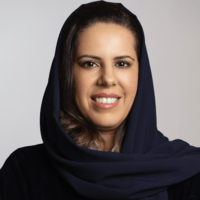
Dr. Husa Alangari is the CEO for the Kingdom of Saudi Arabia (KSA) at Ultimate Learning Academy (ULA), a board advisor, and an internationally recognized edtech leader shaping the future of learning through AI in education, innovation, and policy. She has led national strategies and ecosystem transformation efforts that bridge research, technology, and impact while aligning emerging innovations with workforce and national priorities.
A 2024 EdSafeAI Women in AI Fellow, she earned her PhD in instructional systems technology from Indiana University Bloomington and is recognized for advancing future-ready education systems through public-private partnerships and collaboration across Saudi Arabia, the GCC, and global platforms.
System-Level Reform: Embedding AI Across Schools, Universities, and Workforce Pathways
Saudi Arabia’s education modernization is advancing through coordinated national frameworks that restructure how learners acquire digital and AI-related skills. This effort spans K–12 classrooms, higher education institutions, and targeted workforce initiatives, reflecting a broad view that digital readiness is now a baseline requirement rather than a specialized track. The Ministry of Education, the Saudi Data and Artificial Intelligence Authority (SDAIA), the Ministry of Communications and Information Technology (MCIT), and the National eLearning Center (NELC) guide this transition through aligned mandates that support curriculum reform, technology deployment, and sector-wide capability building.
As Dr. Husa Alangari explains, “Saudi Arabia is integrating AI and digital skills across K-12 and higher education through national frameworks, curriculum reform, and coordinated initiatives led by the Ministry of Education, Saudi Data and Artificial Intelligence Authority (SDAIA), Ministry of Communications and Information Technology (MCIT), and the National eLearning Center (NELC), all aligned with the Human Capability Development Program under Saudi Vision 2030.”
This coordinated model helps ensure that foundational digital competencies are introduced early and reinforced as learners progress into postsecondary study and professional specialization.
Emerging instructional models are beginning to reflect these reforms. Universities are developing research-driven approaches to AI-integrated teaching, while schools are adopting digital content and assessment tools that align with national standards. NELC supports this work through guidelines that govern e-learning quality and the accreditation of digital programs, reinforcing consistency across institutions. SDAIA’s national training pathways introduce students and educators to data literacy and applied AI concepts, and MCIT’s cloud skills initiatives, supported by global technology partners, expand access to industry-aligned learning opportunities.
Within this landscape, organizations like Ultimate Learning Academy help advance applied instructional models. “Through my national work in AI in education and my leadership at ULA, which was recently recognized by HolonIQ as one of the most promising EdTech startups in the MENA region, I see a clear shift toward AI-augmented teaching and personalized learning that supports the future knowledge economy envisioned in Vision 2030,” Dr. Alangari notes. She adds that “technology creates impact only when people know how to use it effectively,” a reminder that the success of digital integration depends on how well institutions prepare educators to engage with new tools.
These combined efforts signal an ongoing transition from curriculum modernization to a broader restructuring of how learning is designed, delivered, and measured across the Kingdom.
A Distinctive National Model for AI-Integrated Education
The Kingdom is implementing these AI-related reforms through a single policy pathway that brings together curriculum decision-makers, digital infrastructure planners, and workforce development bodies within one coordinated system. This arrangement establishes a shared direction for national AI initiatives and reduces fragmentation across institutions, enabling reforms to progress along a common policy timeline. It differs from systems where schools or regional authorities introduce digital changes independently, leading to varied adoption and uneven program development.
Dr. Alangari describes this alignment as central to the Kingdom’s approach. “Saudi Arabia’s approach is distinctive because it connects education, workforce preparation, regulation, and technology deployment in one coordinated national transformation,” she explains.
By integrating multiple policy levers rather than addressing AI readiness in isolated segments, the country aims to create a coherent digital talent pipeline that supports national industries and long-term economic goals.
The pace of implementation reflects this shared structure.
“Through my work shaping AI-integrated learning strategies and supporting national transformation efforts, I have seen how unified governance, rapid implementation, and strong public-private partnerships accelerate digital talent growth at a scale rarely seen in other global systems,” Dr. Alangari notes.
National programs can launch training initiatives, update standards, and expand digital infrastructure without the administrative delays common in more decentralized environments.
Cultural and systemic continuity remain important parts of this transition. Institutions work to integrate technology in a way that preserves the central role of educators and aligns with local values. Dr. Alangari emphasizes this consideration: “Educators in Saudi Arabia are integrating technology in ways that respect cultural values while advancing modern pedagogy. In my work with institutions, I see a responsible and phased approach that strengthens human teaching, preserves cultural identity, and ensures that AI supports rather than disrupts the learning experience.” This clearly reflects a wider intention to ensure modernization complements existing educational practices.
Developing a digitally capable workforce also depends on how teaching practices evolve. Traditional professional development formats do not always meet the demands of AI-enabled learning environments.
As Dr. Alangari explains, “Traditional training models are no longer enough, and we need hands-on, practice-based learning supported by instructional designers and EdTech specialists.” These roles help institutions translate technological tools into structured learning experiences that support student outcomes.
This combination of system-wide coordination and attention to classroom-level practice shapes how AI integration progresses across the country. The national bodies responsible for education and technology set strategic direction, while institutions work to adapt curriculum, train staff, and apply new tools in ways that fit local needs.
The result is a reform process that links policymaking with day-to-day instructional considerations, creating conditions for more consistent adoption. The approach continues to evolve as agencies refine standards, expand training capacity, and respond to educators’ feedback on AI-enabled learning environments.
Governance, Inclusion, and the Expansion of Women’s Participation in the Digital Economy
Saudi Arabia’s AI integration efforts are supported by a governance structure that sets clear expectations for data use, digital safety, and the responsible deployment of technology in learning environments. These frameworks guide how institutions develop content, manage information, and implement AI-enabled tools in classrooms and training programs. National agencies establish policies that align with broader Vision 2030 goals, ensuring that digital transformation proceeds in a secure and organized manner.
Dr. Alangari highlights how these mechanisms shape the country’s approach. “Saudi Arabia is establishing clear governance structures through SDAIA’s national AI strategy, Personal Data Privacy Laws (PDPL), national cybersecurity frameworks, and NELC’s sector guidelines. These mechanisms ensure that AI-enabled learning is ethical, transparent, inclusive, and aligned with the Kingdom’s long-term goals for equitable access and sustainable digital transformation.” These frameworks define the standards institutions must follow when integrating AI into their systems, from data storage practices to the approval of digital content and tools. They also support the government’s aim to create equitable access to high-quality digital learning across regions and institutions.
Inclusion is a central element of Saudi Arabia’s digital capability agenda. Programs designed to expand participation in AI and data-related fields focus on preparing students and professionals for roles in sectors where demand for technical knowledge is increasing.
Dr. Alangari notes that, “Programs under the Human Capability Development Program, SDAIA’s national AI and data pathways, the Saudi Digital Academy under MCIT, and university-led digital initiatives are expanding opportunities for women in advanced technical fields.” These efforts reflect a national priority to cultivate diverse talent pipelines and open new career paths in technology-driven industries.
Several initiatives specifically aim to strengthen women’s access to digital careers. “Women in Digital Economy further supports women entering the digital economy by expanding digital literacy, developing advanced skills, enabling entrepreneurship, and opening more pathways into technology roles,” Dr. Alangari explains.
Another initiative, led by SDAIA, focuses on preparing women for data and AI careers. “SDAIA’s Elevate Initiative also strengthens opportunities for women to enter data and AI careers, reflecting the Kingdom’s commitment to inclusive and future-ready digital transformation.” These programs address skill gaps and provide opportunities for women to transition into high-growth technical fields.
Dr. Alangari also points to areas where continued attention is needed: “Continued emphasis on leadership preparation, workplace readiness, and long-term career development will help strengthen women’s representation in senior and innovation-focused roles, a priority shared across countries worldwide.” Developing long-term career pathways requires both supportive institutional practices and sustained investment in training.
Governance and inclusion intersect when institutions consider how educators and staff adapt to AI-enabled learning environments. The quality of instructional design becomes a determining factor in the effectiveness of digital tools. As Dr. Alangari explains, “A deeper appreciation of the role that learning design and EdTech expertise play in workforce readiness and capability development is also essential, as technology adoption without pedagogical strategy limits long-term impact.” She adds that, “Saudi Arabia’s success will be strongest when we build a full digital learning ecosystem that engages students, teachers, families, and communities, ensuring that innovation translates into meaningful human capability development.” This perspective reinforces the importance of building systems that combine technological infrastructure with human-centered adoption practices.
These developments form the basis for the next phase of national digital capability building, in which governance, inclusion, and institutional readiness determine how effectively the country can sustain the momentum of AI integration.
The Next Phase of AI-Integrated Education
Saudi Arabia’s work to embed AI and digital skills across its education system marks an important shift in how the country prepares its citizens for a rapidly changing economy. The structures established under Vision 2030 give schools, universities, and workforce institutions clearer direction than in the past, and the national focus on human capability development signals an understanding that digital readiness must extend across all stages of learning. The next question is how these reforms continue to take shape as technologies evolve and expectations for digital competence rise.
Much of the country’s progress to date comes from the alignment between government agencies and the institutions that carry out daily implementation. That alignment now faces a new test: whether organizations can adapt quickly enough to keep instructional practices, infrastructure, and educator preparation in step with emerging tools. As AI systems become more capable, the demands placed on both teachers and students will grow, creating the need for training models that support experimentation, collaboration, and long-term skill development.
The continued expansion of digital pathways also places pressure on institutions to ensure that access remains broad. Sectors such as health technology, data services, and advanced manufacturing are developing new technical roles, and the pathways into these fields must remain clear and well-supported. Regional differences in digital exposure and institutional resources may shape how quickly learners progress toward advanced competencies, underscoring the need for consistent access as a priority for program designers and policymakers.
Still, the foundations laid over the last several years provide a strong starting point for the next phase of reform. The combination of national governance, expanding digital infrastructure, and coordination among education and technology agencies gives the country a structure capable of responding to new demands as they emerge. The direction is set; what comes next depends on how effectively institutions translate strategy into sustained practice and how consistently learners are supported throughout that process. The decisions made in the coming years will influence not only the country’s workforce but the broader ability of its education system to meet the ambitions of Vision 2030.