Can Prison Laptops Turn Coursework Into a Real College Education?
“Professors enjoy teaching them because it’s unique that they’ll have all of the reading material done. They’ll come with questions.”
Orlando Sanchez Zavala, Senior Fiscal & Policy Analyst at the California Legislature
California is placing college coursework within closer reach of thousands of people in prison. Over the past three years, the state correctional system has spent $23.2 million distributing 30,000 laptops to incarcerated students. Nearly half have gone to roughly 13,000 people enrolled in community college courses, giving them access to digital assignments, research databases, and online learning systems increasingly used across California higher education.
The rollout changes how students participate in college from inside a correctional facility. Coursework that once moved through paper packets and institutional mail can now be typed, submitted and returned electronically. Students gain more direct access to research materials, while instructors can provide feedback without relying on the same delays built into correspondence courses. The devices also introduce students to the digital tools that shape enrollment, degree completion and much of the modern workplace.
Distribution, however, is only one part of the educational model. Each laptop’s usefulness depends on whether students can connect reliably, reach instructors, receive academic support, and move through a coherent sequence of courses toward a credential.
To understand what California’s laptop rollout reveals about the future of college education in prisons, we spoke with Orlando Sanchez Zavala, a senior fiscal and policy analyst at the state’s nonpartisan Legislative Analyst’s Office, whose work examines correctional rehabilitation programs and community college education for incarcerated students.
Meet the Expert: Orlando Sanchez Zavala, Senior Fiscal & Policy Analyst at the California Legislature
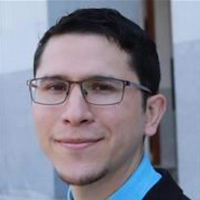
Orlando Sanchez Zavala is a senior fiscal and policy analyst at the California Legislature’s Legislative Analyst’s Office (LAO), the nonpartisan fiscal and policy adviser to the state Legislature. His work focuses on corrections and rehabilitation, with responsibilities spanning correctional health care, rehabilitation programs, juvenile justice, community corrections, parole supervision and the Prison Industry Authority.
He holds a master of public policy from the University of Michigan and a bachelor’s degree in American studies and public policy from the University of California, Berkeley. His expertise centers on how state funding, program design, and institutional oversight shape outcomes across California’s correctional and reentry systems.
From Paper Packets to Online Coursework
Before laptops enter the system, much of college education in prison moves at the speed of institutional mail.
“Students were completing a lot of their coursework on paper and pencil,” Sanchez Zavala explains.
An essay, exam, or worksheet is written by hand, placed in an envelope, and sent to the instructor for grading. The marked assignment then makes the same trip back.
That delay shapes how students learn. In a correspondence course, they work through a syllabus independently and complete required milestones within the semester, often advancing before an instructor’s comments arrive. “Students felt like they were getting the feedback late,” Sanchez Zavala notes. In a math course, for example, a student may already be working through the next section by the time corrections from an earlier exam reach the prison. The information remains useful, but not always when it is most needed.
Research requires its own chain of assistance. A student may ask a prison librarian to locate a source, while an instructor conducts research outside the facility and brings printed articles into class. The materials available for an assignment are often determined before the student begins following a question.
Laptops give students more room to do that work themselves. They can type essays, submit assignments electronically and use an online database to find articles for research papers or supplemental reading. Sanchez Zavala says students “are able to do a lot of this independently,” while still working with librarians when they need help. Remote instructors can also return comments more quickly, allowing students to revise work or address a misunderstanding before the course moves too far ahead.
The transition introduces another form of learning. Some students must become comfortable typing, navigating files, and using online course systems while also keeping up with the academic material. Sanchez Zavala describes an adjustment period, but says the response during the LAO’s prison visits is largely positive.
“For the most part, students express this has been a big improvement towards paper and pencil,” he shares.
Laptops give students greater control over research, submission and revision. Whether those gains hold depends on their ability to connect consistently to the systems now carrying the course.
Enabling Digital Coursework
Online coursework now depends on a physical question inside each prison: where can a student get a signal? Wi-fi does not function uniformly across facilities, housing units, or individual cells. In some prisons, students connect from education areas or classrooms. Elsewhere, access is confined to common spaces that may only be available at certain times.
“Not all prisons have access to wi-fi in the same ways,” Sanchez Zavala explains. “They might be in classrooms, or they might be in certain common area spaces.”
The location of that connection shapes when students can work. A reading stored in an online database remains out of reach until the student reaches an approved area with a reliable signal. The same is true for submitting assignments or reviewing an instructor’s response. Sanchez Zavala says the LAO encountered students adapting to those limits during its prison visits.
“We found students doing creative things to get access to … reception or working with the staff so that they can be at certain locations to complete an assignment,” he illustrates the situation.
Once students connect, their progress also depends on the academic services surrounding the course. The LAO hears about “infrequent counseling sessions” with advisers who help students choose classes for the following semester, as well as limited access to trained tutors. Without regular guidance, students may have fewer opportunities to confirm that a course fits their degree requirements or determine what they need to take next.
Students often create their own support systems. Some form study groups with people who have already completed the class, continuing a practice that also helped them work through correspondence courses before feedback arrived. “A lot of students relied on peers,” Sanchez Zavala comments.
That peer support can keep a student moving through difficult material, but access to counseling and trained tutoring still varies. The laptop connects students to coursework; colleges determine whether the services around it help them move from one class to the next. How California funds those colleges influences which parts of that support receive sustained attention.
How the Funding Model Shapes Student Support
California’s community colleges do not receive funding for incarcerated students in the same way they do for students outside prison. In 2018, the state changed its formula so that part of a college’s funding depends on outcomes such as earning a certificate or associate degree and transferring to a four-year institution. Incarcerated students remain outside that structure. Colleges serving them are still funded primarily according to enrollment.
“As of now there’s no link to performance in the same way that a college would receive funding for someone out in the community,” Sanchez Zavala says.
This distinction matters because enrollment measures whether a student enters a course, not whether that student gets the support needed to finish a program. A college can be funded for offering classes without the same financial incentive to provide regular counseling, trained tutoring, or careful course planning. Those are the services students need to understand which credits count toward a degree, what to take the following semester, and how to prepare for transfer.
During the LAO’s prison visits, those supports are among the areas students describe as inconsistent. Sanchez Zavala says the funding structure may help explain why they are not always prioritized.
The office recommends adding a performance component for incarcerated students, drawing from measures already used elsewhere in the community college system. Some would need to be adapted to the conditions of prison education, but the broader purpose remains the same: connect funding more closely to student progress.
“We find that adding a performance component would create a stronger incentive for colleges to ensure that students are … achieving positive outcomes and providing these robust support services that would help them,” Sanchez Zavala suggests.
The recommendation does not begin from an assumption that incarcerated students are struggling academically. Sanchez Zavala says they complete courses at rates similar to their peers outside prison. Faculty members also describe students who arrive prepared, complete the assigned reading and bring questions to class.
“Professors enjoy teaching them because it’s unique that they’ll have all of the reading material done,” he shares. “They’ll come with questions.”
Their performance shows what students are already bringing to the classroom. The policy question is whether colleges are funded to match that effort with the services that carry them from enrollment to completion. Answering it also requires California to track what happens after a course ends.
After the Course Ends
Moving forward, California’s next measure of success is whether incarcerated students carry their coursework into completed degrees, continued education, employment and lower rates of reoffending after release. At present, the state can track enrollment and course completion more readily than the longer path that follows.
“One of the things we currently don’t know,” Sanchez Zavala says, “is how effective these are at preventing crime.” A broader body of research links higher education with lower recidivism, or reoffending, yet California has not conducted an evaluation showing how its own community college programs contribute to those outcomes.
The uncertainty also concerns what produces the benefit. “There’s also a little bit of a black box in the research,” he points out. “It’s not clear what it is that’s happening. Is it the classroom? Is it the being with people that want to study or, or specific classes?”
Answering those questions requires looking beyond whether a student registers for or passes an individual class. Sanchez Zavala points to employment after release and whether students continue their education or transfer once they return to their communities. Colleges and the California Department of Corrections and Rehabilitation already collect parts of that information. Closer coordination would allow the state to follow students from coursework through credentials, further study and employment.
An evaluation could also show how the conditions surrounding the laptops shape those outcomes. Reliable access to course materials, timely communication with instructors, counseling, tutoring, and a clear sequence of classes may each affect whether a student continues toward a degree. Without following that progression, California can count participation without fully understanding which programs help students complete what they began.
The laptops already change how students research, write, and receive feedback. The remaining measure is whether those improvements help them continue through a program and reach the goals that brought them into the classroom. Ultimately, better tracking, Sanchez Zavala says, would help determine whether the programs are functioning effectively and whether students are “walking away with the goals they set for themselves when they first started.”